
Patient's awareness
Do's & Don't
If in the Case of :
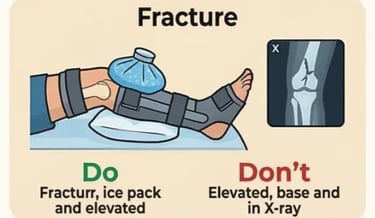
Fracture
Do: Immobilize the area immediately, apply ice to reduce swelling, and keep the limb elevated.
Don’t: Attempt to "straighten" the bone or bear weight on the injury until cleared by a doctor. Seek urgent X-rays for any suspected break.
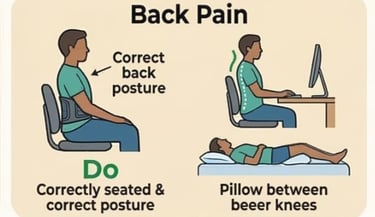
Back Pain
Do: Maintain gentle movement, use lumbar support while sitting, and sleep with a pillow between your knees.
Don’t: Stay in bed for prolonged periods or lift heavy objects using your back muscles instead of your legs.
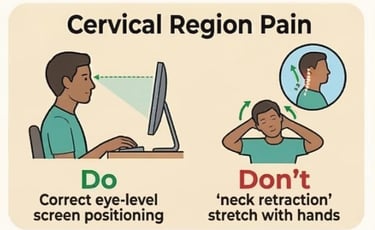
Cervical Region Pain
Do: Adjust your workstation for eye-level viewing and perform gentle neck retractions.
Don’t: Cradle a phone between your ear and shoulder or sleep on multiple high pillows, which can strain the upper spine and neck muscles.
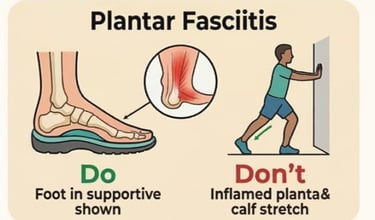
Plantar Fasciitis
Do: Wear supportive shoes with arch support and stretch your calves daily.
Don’t: Walk barefoot on hard surfaces or continue high-impact activities like running until the sharp, "first-step" morning pain subsides significantly.
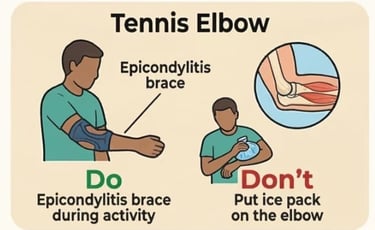
Tennis Elbow
Do: Use an epicondylitis clasp (brace) during activity and apply ice after use.
Don’t: Repeatedly perform forceful gripping or wrist extension movements. Avoid lifting heavy bags with your palm facing down, as this stresses the tendon.
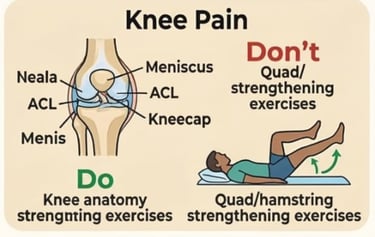
Knee Pain
Do: Strengthen your quadriceps and hamstrings to support the joint.
Don’t: Ignore persistent swelling or engage in high-impact jumping on hard surfaces. Avoid keeping the knee bent in one position for several hours at a time.
Osteoporosis Spine
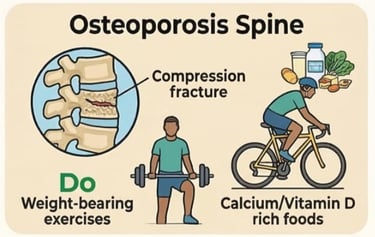
Do: Focus on weight-bearing exercises and maintain a diet rich in Calcium and Vitamin D.
Don’t: Perform deep forward-bending (flexion) or heavy lifting, as these movements increase the risk of vertebral compression fractures.
Osteoarthritis (Knee)
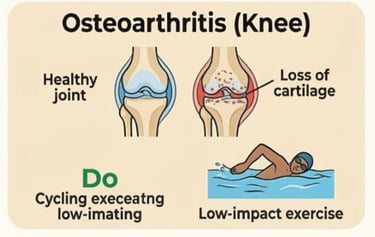
Do: Opt for low-impact exercises like swimming or cycling and maintain a healthy weight.
Don’t: Squat or kneel for long periods. Avoid total inactivity, as "movement is lotion" for arthritic joints to prevent stiffness.
Rheumatoid Arthritis
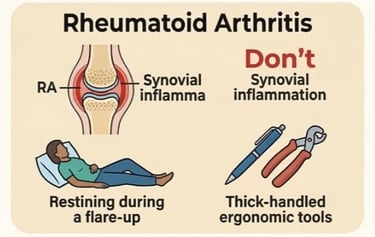
Do: Balance activity with rest during "flares" and use joint-protection tools (like thick-handled pens).
Don’t: Push through intense joint heat and swelling. Avoid high-stress environments that can trigger inflammatory responses or worsen systemic fatigue.
Shoulder Pain
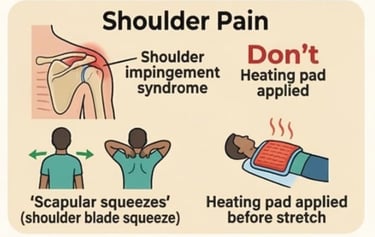
Do: Practice "scapular squeezes" to improve posture and use heat before stretching.
Don’t: Sleep on the affected side or reach behind the car seat. Avoid overhead lifting if you experience a sharp "pinching" sensation.
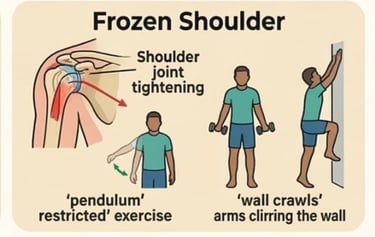
Frozen Shoulder
Do: Perform "pendulum" exercises and gentle "wall-crawls" to maintain range of motion.
Don’t: Aggressively jerk the arm or stop moving it entirely due to pain, which can cause the joint capsule to tighten further.
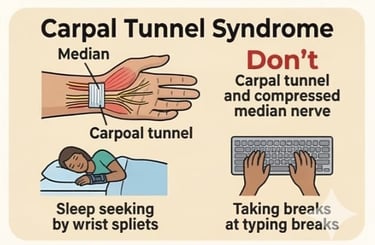
Carpal Tunnel Syndrome
Do: Wear a neutral wrist splint at night and take frequent typing breaks.
Don’t: Sleep with your wrists curled tightly inward. Avoid repetitive vibrating tools or prolonged forceful wrist flexion which compresses the median nerve.
If in the Case of :
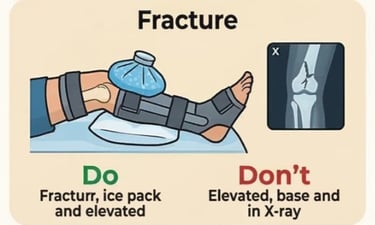
Fracture
Do: Immobilize the area immediately, apply ice to reduce swelling, and keep the limb elevated.
Don’t: Attempt to "straighten" the bone or bear weight on the injury until cleared by a doctor. Seek urgent X-rays for any suspected break.
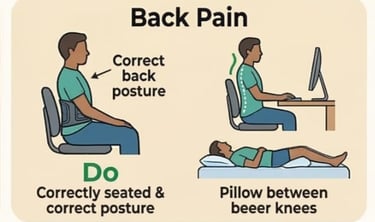
Back Pain
Do: Maintain gentle movement, use lumbar support while sitting, and sleep with a pillow between your knees.
Don’t: Stay in bed for prolonged periods or lift heavy objects using your back muscles instead of your legs.
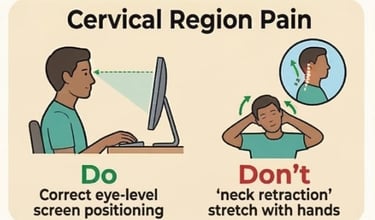
Cervical Region Pain
Do: Adjust your workstation for eye-level viewing and perform gentle neck retractions.
Don’t: Cradle a phone between your ear and shoulder or sleep on multiple high pillows, which can strain the upper spine and neck muscles.
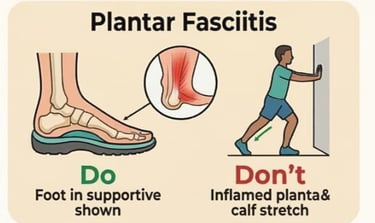
Plantar Fasciitis
Do: Wear supportive shoes with arch support and stretch your calves daily.
Don’t: Walk barefoot on hard surfaces or continue high-impact activities like running until the sharp, "first-step" morning pain subsides significantly.
Tennis Elbow
Do: Use an epicondylitis clasp (brace) during activity and apply ice after use.
Don’t: Repeatedly perform forceful gripping or wrist extension movements. Avoid lifting heavy bags with your palm facing down, as this stresses the tendon.
Knee Pain
Do: Strengthen your quadriceps and hamstrings to support the joint.
Don’t: Ignore persistent swelling or engage in high-impact jumping on hard surfaces. Avoid keeping the knee bent in one position for several hours at a time.
Osteoporosis Spine
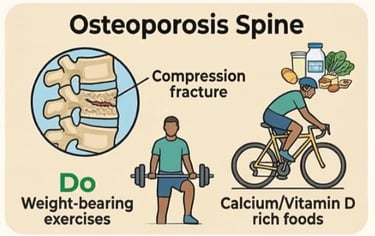
Do: Focus on weight-bearing exercises and maintain a diet rich in Calcium and Vitamin D.
Don’t: Perform deep forward-bending (flexion) or heavy lifting, as these movements increase the risk of vertebral compression fractures.
Osteoarthritis (Knee)
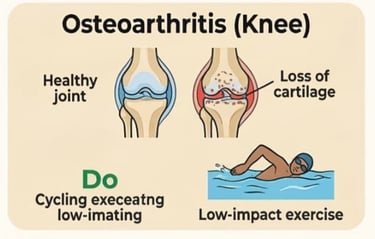
Do: Opt for low-impact exercises like swimming or cycling and maintain a healthy weight.
Don’t: Squat or kneel for long periods. Avoid total inactivity, as "movement is lotion" for arthritic joints to prevent stiffness.
Rheumatoid Arthritis
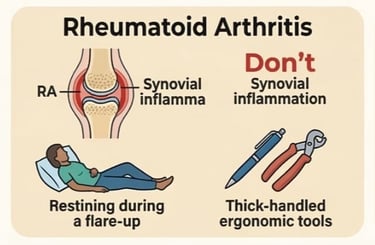
Do: Balance activity with rest during "flares" and use joint-protection tools (like thick-handled pens).
Don’t: Push through intense joint heat and swelling. Avoid high-stress environments that can trigger inflammatory responses or worsen systemic fatigue.
Shoulder Pain
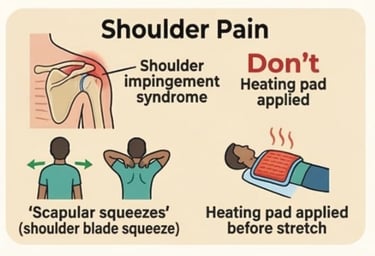
Do: Practice "scapular squeezes" to improve posture and use heat before stretching.
Don’t: Sleep on the affected side or reach behind the car seat. Avoid overhead lifting if you experience a sharp "pinching" sensation.
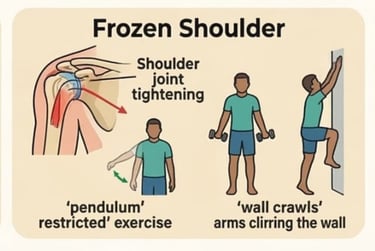
Frozen Shoulder
Do: Perform "pendulum" exercises and gentle "wall-crawls" to maintain range of motion.
Don’t: Aggressively jerk the arm or stop moving it entirely due to pain, which can cause the joint capsule to tighten further.
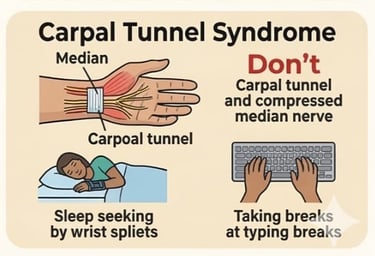
Carpal Tunnel Syndrome
Do: Wear a neutral wrist splint at night and take frequent typing breaks.
Don’t: Sleep with your wrists curled tightly inward. Avoid repetitive vibrating tools or prolonged forceful wrist flexion which compresses the median nerve.